Subaru has really rolled the dice with the 2026 Outback. For one, it no longer looks like an Outback — because it no longer looks like a wagon. It has been restyled to look more like a crossover SUV.
It's also a lot more expensive.
The Outback used to be one of Subaru's more affordable models, with a base price under $30,000.
The 2026 model is priced just shy of $35,000 to start — $5,000 higher to start than the 2025 model.
Will people buy in to the new look — and the new price?
What It Is
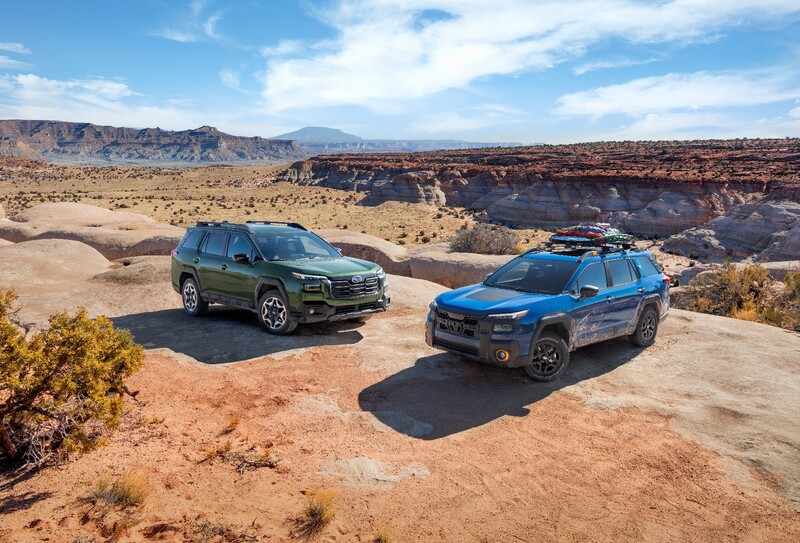
The Outback was Subaru's midsize wagon. It now looks more like a midsize crossover SUV. Subaru is apparently hoping the more rugged looks will draw in buyers who want to drive a rugged wagon but don't want to look like they're driving one.
The new, more crossover-SUV-looking body also increases interior/cargo room.
Prices start at $34,995 for the Premium trim — a $5,000 uptick from last year's Outback wagon, which stickered for $29,995 to start. Some of the cost increase has to do with the restyle — and new standard equipment — including LED headlights, a power liftgate, synthetic leather (rather than cloth) upholstery, heated seats and a new/larger LCD touch screen — but the major reason has to do with President Donald Trump's tariffs, which have made vehicles made in Japan (and Korea and so on) much more expensive to sell here.
The Limited trim ($41,715) gets heated second-row seats and a heated steering wheel, a wireless charging pad and an upgraded eight-speaker Harman Kardon audio system.
Both the Premium and the Limited come standard with a naturally aspirated (no turbo) 2.5-liter horizontally opposed "boxer" engine, paired with a continuously variable transmission and all-wheel drive.
The Limited XT ($44,365) gets a more powerful turbocharged 2.4-liter engine, plus a set of 19-inch wheels and a 360-degree camera system.
The Wilderness ($44,995) gets a lifted suspension, additional drive modes and a set of 17-inch wheels with all-terrain tires, plus all-weather floor mats and unique-to-this-trim front and rear styling/accents. The turbo'd 2.4-liter engine is standard.
Touring trims ($45,395) get real leather upholstery, ventilated front seats, the 360-degree camera system as well as the upgraded Harman Kardon stereo, phone charger pad and navigation. This one comes with the 2.5-liter (no turbo) engine.
The top-of-the-line Touring XT ($47,995) is basically the same as the Touring but comes with the stronger, 2.4-liter turbocharged engine — as well as a set of 19-inch wheels.
What's New for 2026
The Outback gets a major makeover, inside and out.
What's Good
— A bit more room for cargo than before.
— Still available with — and without — a turbocharged engine.
— More standard amenities than previously.
What's Not So Good
— Much higher standard price than previously.
— Only available with a CVT automatic.
— Some creepy "driver assistance" tech is standard.
Under the Hood
One of the big differences between the Outback and the slightly smaller Forester — which shares similar styling — is that the Outback is available with more than just one engine.
The Outback's standard 2.5-liter (horizontally opposed, as are all Subaru engines) four-cylinder engine is the Forester's only available engine.
This engine touts 180 horsepower and also that it isn't turbocharged, which reduces cost, complexity and pressure. Turbocharged engines make more power by pressurizing the incoming air and forcing it into the engine's cylinders. This results in a more powerful explosion within the cylinders, but it also results in more ... pressure. More stress — applied to pistons and connecting rods and bearings. These parts can be made of stronger alloys so as to be able to handle the stress, but the fact remains that the turbocharged engine is subjected to more stress than an engine that isn't pressurized. It also costs more — a great deal more, in this case — because it has more components.
The least expensive Outback with its optionally available 2.4-liter turbocharged engine — which touts 260 horsepower — is priced $9,370 higher than the base-trim Outback with the standard 2.5-liter engine ($44.365 versus $34,995). That does get you 80 more horsepower — and a zero to 60 mph time of about 6.2 seconds versus about 8.8 seconds with the standard, non-turbocharged four. But if you're not someone who doesn't want to pay $9,370 more to get to 60 mph two seconds sooner — and likes the idea of owning an engine that's under less pressure — it's nice to have the choice.
On the other hand, there is no choice when it comes to transmissions. Both of the Outback's engines are paired only with a CVT automatic, chiefly because of the fuel efficiency advantage.
The CVT is what bumps the Outback's mileage — with the standard 2.5-liter engine — to 25 mpg city, 31 mpg highway. Even when equipped with the much stronger 2.4-liter turbo'd engine, the Outback's mileage is 21 mpg city, 29 mpg highway — a negligible difference.
Every Outback comes standard with full-time "symmetrical" AWD, which Subaru calls that because it splits the power flow equally to either side of the vehicle (not just front to back).
On the Road
Everything is relative — including people's perception of what's "slow" — and "fast." The Toyota Prius used to be regarded as the eponymous "slow" car — because it took about 11 seconds to get to 60 mph. The current Prius gets to 60 mph in just over six seconds — which makes it faster (quicker is more accurate) than two-thirds of the V8 powered muscle cars of the 1960s.
Relative to the current Prius, a vehicle like the Outback that takes about 8.8 seconds to get to 60 mph (with its standard engine) is "slow." But relative to the previous generations of Priuses, the Outback is practically a Ferrari. One that gets pretty good gas mileage too.
The better question to ask is whether the Outback with its standard engine is underpowered. The answer to that question will hinge on what you expect. If you expect neck-snapping thrust, the Outback with its standard engine will feel underpowered. If you expect it to move forward in tandem with the cars beside you and ahead of you in traffic, it will feel powerful enough. It is not necessary to floor it to keep pace because 99% of the time, the drivers of the other cars around you are not flooring it, either. Most drivers just drive. They don't race.
There's also the option to go with the plenty-powerful 2.4-liter turbocharged engine, which enables this Subaru to accelerate as quickly as the Ferraris of the '70s and the Mustang GTs (with V8s) of the early 2000s.
That's relativity for you.
Subaru does a pretty good job of programming the CVT to be unobtrusive and to emulate the operating characteristics of automatics with set forward speeds that shift up and down. The CVT mimics this by varying the range — which manifests as varied engine RPM — as you accelerate. The main noticeable differences crop up when you floor it — and the CVT lets the engine spin to high RPM and stays there (until you ease off the accelerator pedal) — and when you floor it and your coffee doesn't slosh all over the center console. There is no "shift shock" with the CVT because there are no shifts (either up or down). This latter is one of the great positives of CVTs, in terms of smoothness. The biggest negative is the increased drivetrain noise that is chiefly increased engine noise arising from the engine running up to high RPM when you floor the accelerator pedal and keep it floored.
But that noise dies down as soon as you back off a little.
At the Curb
The new Outback looks a lot like the new Forester. They look so much alike, in fact, it is difficult to tell them apart at a glance unless you look at them parked side-by-side. Then you will see the Outback is larger than the Forester, which is 183.3 inches long and a compact vehicle, while the Outback is 191.7 inches long and so a midsize vehicle.
It is still about the same size as the old Outback, which was 191.1 inches long, but it looks very different. The old Outback was a wagon, with a lower roofline and a "fast" (more steeply raked) windshield. It was also one of very few wagons left, which set it apart (visually) from all of the crossovers and SUVs out there. Now, the interesting thing is that while wagons haven't sold especially well in the United States — though they sell very well in Europe — the Outback wagon has been a consistently strong seller for Subaru for decades. Did Subaru make a mistake in restyling the Outback to look more like other crossovers?
Time will tell.
The new Outback does have more interior space, including a total of 80.5 cubic feet of available cargo space with its second row folded forward (about a 5-cubic-foot increase from the wagon's 75.6-cubic-foot total capacity), and the taller/boxier shape makes the available space both more accessible as well as more usable (in that larger, rectangular-shaped boxes can fit more easily inside a more rectangular-shaped opening and interior.
Wilderness versions are nearly as capable in adverse conditions as four-wheel-drive SUVs because they have just shy of 10 inches of ground clearance, and that is what will get you through deep, unplowed snow and keep you from getting hung up by a protruding rock on a washed-out dirt road. AWD is important in terms of traction. But if you haven't got lift, an AWD vehicle can be as stymied by deep snow and washed-out dirt roads as a vehicle without AWD.
The Rest
Subaru — like other car companies — is equipping its latest models with an eye movement monitor that uses cameras built into the upper section of the LCD infotainment screen off to the driver's right. This is not Subaru's fault. It is a government mandate that goes into effect come the 2027 model year. Subaru — and many other manufacturers — are just being anticipatory of the mandate.
The good news is that — for now — you can blind the monitor (and shut down the annoying parenting) using a piece of blue painter's tape or electric tape.
The Bottom Line
It's probably not so much the styling change that buyers will take issue with as the Outback's essential functional attributes haven't been changed. It's the chest-tightening $5,000 uptick in this formerly affordable Soobie's base price that may prove a harder sell to people already pinched by the cost of $4 (and climbing) gas, along with everything else.
Eric's latest book, "Doomed: Good Cars Gone Wrong!" will be available soon. To find out more about Eric and read his past columns, please visit the Creators Syndicate webpage at www.creators.com.
View the Subaru Outback this week.







View Comments